2 hours ago
Latest Updates
Featured Posts
Get in Touch
Location:
123 Innovation Street
Tech District, CA 94105
123 Innovation Street
Tech District, CA 94105
Email:
[email protected]
[email protected]
Phone:
+1 (234) 567-890
+1 (234) 567-890
Invincible A Thing of the Past: The Reasons India's Red-Ball Cricket Reputation Lies in Ruins
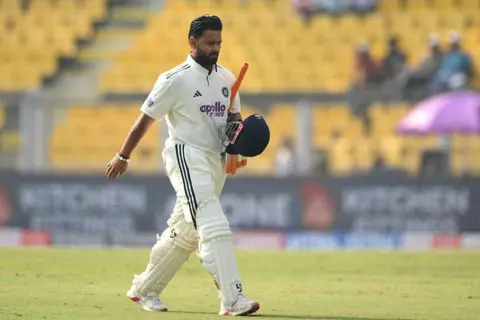
The Indian cricket team's shocking 0-2 defeat to South Africa in the recent red-ball series has sent shockwaves through the squad.
Earlier this week, South Africa handed India their heaviest loss in Test cricket, contrary to predictions. This represented South Africa's initial series triumph in India in a quarter-century and the host nation's second home series loss in just one year after a 12-year invincible streak.
The positive trajectory built over the last several months has all but vanished and the prospects of several players - along with head coach the coach - are now uncertain.
Initial Hope Disappears
The young team's commendable display in England this season, under a new captain, pointed to a successful handover following the near-simultaneous exits of veterans R Ashwin, Rohit Sharma, and Kohli.
An easy 2-0 triumph over the Windies at the beginning of the home season strengthened that view, before the South Africans turned up and handed out a devastating defeat.
The home side were somewhat unlucky that captain Shubman Gill suffered an injury early on in the first Test and did not participate again in the series. But that fails to account for the side of the well below standard performance in each match against South Africa.
A number of star cricketers suffered, and a few members aspiring to extended tenures in Tests were revealed to be still inadequate - in skill or mindset - for the Test cricket.
Worrying Trend
This represented the second clean sweep at home experienced by India in just more than a year. In 2024, little-fancied the Kiwis had achieved a staggering 3-0 win which effectively cost India a spot in the WTC final.
The recent defeat to South Africa risks harming the team's prospects of reaching the final of this season as well.
After being third in the WTC rankings prior to the contest, India have dropped to fifth place. Even though nine further games are yet to be played, a majority are against the Aussies. Ordinarily, playing at home would be a significant benefit - even when facing the strong Australian side. However the failures against the Kiwis and the Proteas leave little scope for such comfort.
Causes of the Fall
India's vulnerability in Test cricket has been significantly highlighted. Nevertheless, the reason India have performed so poorly in Test matches at home in recent times is remains puzzling.
From the year 2000 onwards, India were considered impregnable in Test cricket in home conditions. In hot, humid conditions and on tracks that assisted spinners and suited their batsmen and bowlers, India brooked no opposition. The occasional loss, like in the 2012-13 season against England, was seen as an exception.
Today, India look to be easy pickings on home turf.
Versus the Kiwis in last year and South Africa currently, the home side were defeated by their own tactics. The pitches they developed to help their style failed miserably, as rivals exploited them better, beating the home team's players when it was most crucial.
What Happened?
Some suggest that the Indian team is struggling in home conditions because home surfaces have been altered from spinning tracks to pace-friendly pitches to train the squad to do well in foreign conditions.
A few mention that the IPL, in which many overseas players take part, has removed the unfamiliarity and challenge subcontinental pitches would present to them in the past.
Even though there is validity in these views, it still does not explain why India's performances at home have experienced such a staggering decline.

Various Shortcomings
Most former players diagnose a complex, multi-headed problem, not only a few causes.
Experts and participants have highlighted several failings following India's disappointing performance to the South Africans: not respecting the foe, inadequate readiness, flawed selections, overconfidence, constant chopping and changing of the playing XI, and prioritising limited-overs over Test cricket.
This was clear in the showings of the side.
Players such as Pant and Jaiswal, of whom great things were anticipated, suffered for their lack of application, while Sai Sudarshan, Nitish Kumar Reddy, and Jurel - who were hoping to secure their position in the squad - fell short in ability and attitude, suffering the consequences for their nonchalant approach.
Only a handful - Ravindra Jadeja, Jasprit Bumrah, Kuldeep Yadav, Mohammed Siraj and Washington Sundar - lived up to their ability and standing - but not sufficiently to win matches.
Leadership Under Fire
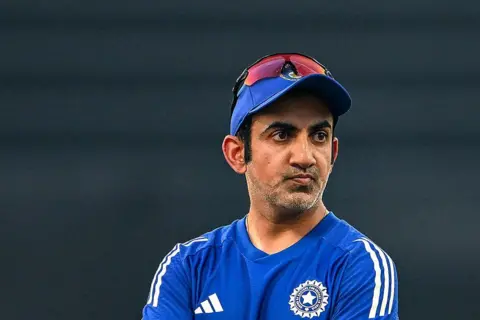
The review targeted the entire setup - selectors and support staff were also under fire, driven by disappointed supporters and vocal past stars. At the centre of the criticism was team coach Gambhir.
In his post-series press

Patricia Nelson
Elara Vance is a digital strategist with over a decade of experience in tech consulting, specializing in helping UK businesses navigate digital transformation and IT innovation.
Sponsored News
Colombian Leader Says 'I Would Return to Arms Once More' if US Launches an Attack.
Patricia Nelson
03 Oct 2026
'We are a family unit here': Sunderland's midfielder celebrates good times at Sunderland.
Patricia Nelson
03 Oct 2026